
Artificial Grass Benahavís
Artificial Grass in Benahavís Tailored to Each Plot
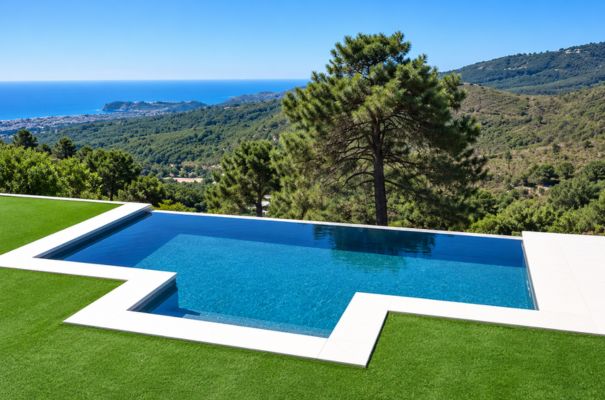
Sloping plots are common in Benahavís, particularly in residential areas that rise towards the mountains. In some gardens, we find several levels, embankments, rocky ground or restricted access that can affect how materials are brought onto the property.
That is why installing artificial grass in Benahavís is less about choosing the best-looking product in a catalogue and more about getting the base, drainage and surrounding details right.
What Lies Beneath the Grass Determines the Final Result
Before laying a single section of artificial grass, we assess the ground: removing the topsoil or any loose material, adding aggregate, compacting and levelling the surface. On a sloping plot, the aim is not to flatten everything, but to preserve the gradients that allow water to drain away and prevent areas where water could collect after a storm.
This preparation explains why two gardens fitted with the same artificial grass can look very different after a few years: one retains a firm, even surface, while the other develops ripples, visible footprints and areas of standing water. If the garden has steps, retaining walls or points where water tends to collect, we work out how to deal with each transition before laying the grass.
Designed for How You’ll Really Use Your Outdoor Space

Savings

Turnkey Service

Quality in Every Finish

Experience
How You Use the Space Determines the Right Artificial Grass
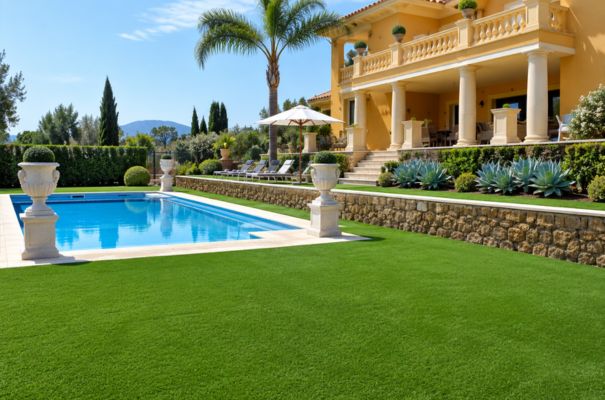
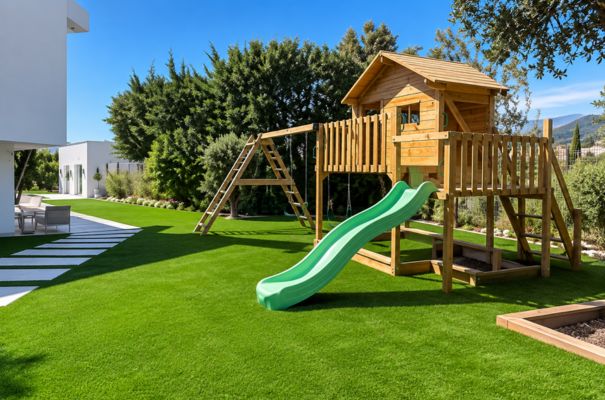
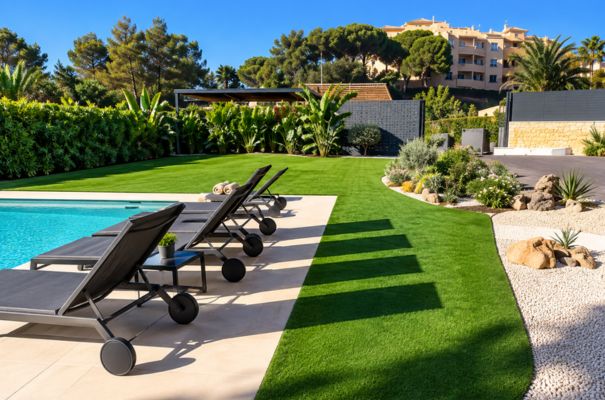
Pile height, density and feel are not chosen purely for aesthetic reasons, but according to how each area will actually be used. A pool area calls for a surface that feels comfortable under bare feet and offers good drainage; a garden with dogs needs durable fibres that are easy to clean;a frequently used route to the entrance or garage requires resilient fibres that recover well after repeated foot traffic; and a seating terrace benefits from a pleasant feel and a moderate pile height.
The same applies to colour: on plots with high sun exposure, an excessively uniform shade can look less natural. We can show you samples and compare them in your own outdoor space, under the actual light conditions, before you decide.
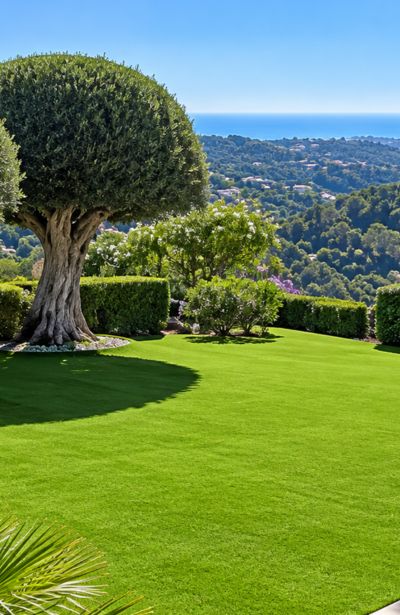
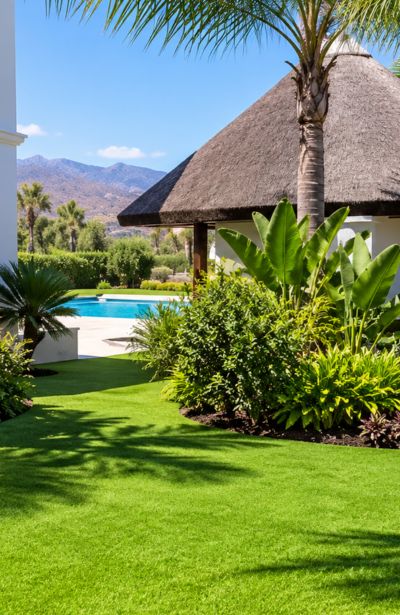
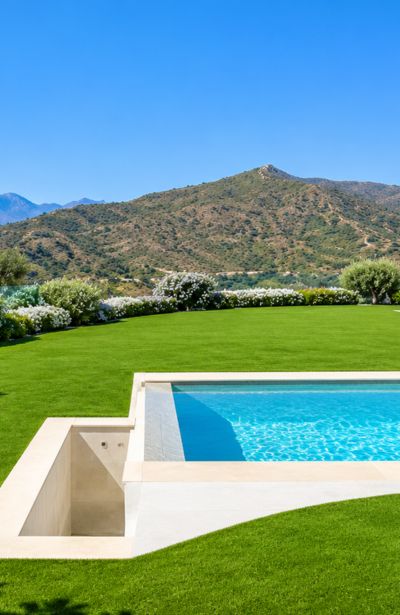
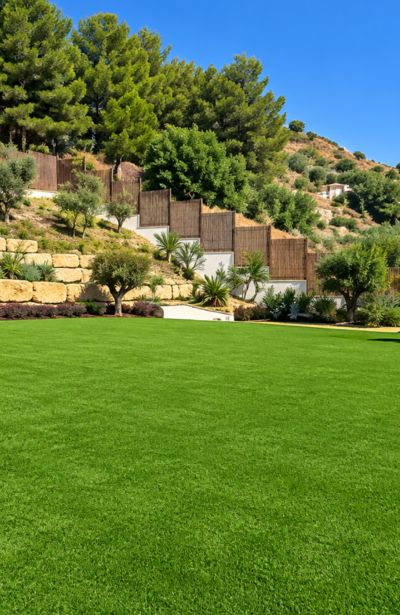

We Work with Different Intercésped Ranges
We work with Intercésped and bring samples to your property so you can compare texture, pile height and colour directly in the space itself. Seeing the artificial grass under the actual light conditions in your garden helps you make a much better decision than choosing solely from a photograph or catalogue.
Soil or Paved Surface: Two Different Types of Installation
On Soil
Here, most of the work lies in the preparation: excavating to the required depth, adding and compacting the base material, levelling the surface and controlling how water drains through the ground.
This is the most common situation for properties with large gardens, and it also provides the greatest flexibility to reorganise the space, define pathways and integrate rockeries, existing trees or planted beds.
On Concrete, Tiles or Decking
On terraces, porches and penthouse roof terraces, no excavation is required, but we do need to check that the surface drains properly and that the drainage outlets continue to work effectively.
We prepare the appropriate base, fit the artificial grass neatly around pillars, planters and drains, and pay particular attention to the perimeter finish so that the edges do not lift in the wind or remain visible.
The Details That Make a Difference Over Time
An installation should not be judged on the day we finish it, but several months later. The joins between sections need to remain aligned without the fibres separating; all rolls must be laid with the fibres facing in the same direction, otherwise the surface will appear to have different shades depending on the viewing angle.
Cuts around inspection covers, kerbs, planters and tree trunks need to fit neatly without leaving gaps, and the perimeter must be securely fixed so that no edges lift. These details may barely be noticeable in a photograph, but they make the difference between a professional installation and a rushed one.
Hillside Plots: When Logistics Matter Too
On some plots in Benahavís, we find ramps, steps or access points that large vehicles cannot use. That is why we plan the logistics before starting: how the materials will be brought in, where they will be stored and in what order we will carry out the work, so access routes remain clear and unnecessary interruptions are avoided.

Areas We Cover
What Our Clients Say
Publicado en GoogleTrustindex verifica que la fuente original de la reseña sea Google. Nunca suelo hacer reseñas pero en esta ocasión merece hacerlo. Recomiendo esta empresa mil por mil. Son unos profesionales!! Mi jardín daba pena, pero ahora es un paraíso. Ha quedado precioso y han cumplido totalmente el plazo. Han tardado 5 días solamente, teniendo en cuenta todo el trabajo que tenian. No hemos tenido ni un problema. Y el precio más que razonable.Publicado en GoogleTrustindex verifica que la fuente original de la reseña sea Google. Great job! My garden looks amazing ❤️ High quality grass, professional and super friendly team. Highly recommended!Publicado en GoogleTrustindex verifica que la fuente original de la reseña sea Google. Grandes profesionales,La mejor empresa de Césped artificial de la Costa del SolPublicado en GoogleTrustindex verifica que la fuente original de la reseña sea Google. Nos recomendaron trabajar con ArtGarden por el precio y sin duda volveríamos a recurrir a ellos por el resultado y el servicio. Resolvieron todas nuestras dudas y nos guiaron para elegir la mejor opción siempre adecuándose a nuestro presupuesto. 100% recomendable.Publicado en GoogleTrustindex verifica que la fuente original de la reseña sea Google. Desde el principio el trato fue estupendo. Nos explicaron y recomendaron el mejor césped para nuestro jardín, y el resultado es espectacular. La instalación fue rápida y limpia.Publicado en GoogleTrustindex verifica que la fuente original de la reseña sea Google. Estuvimos mucho tiempo valorando distintas opciones para nuestro jardín y estamos muy contentos de haber elegido esta empresa tan familiar y profesional. La factura del agua ha bajado un montón y nos encanta ver todo en perfecto estado al salir al jardín. Muchas Gracias ArtGardenPublicado en GoogleTrustindex verifica que la fuente original de la reseña sea Google. Estamos encantadisimos con nuestro nuevo jardín. Nos pusieron césped sintético que parece real, es súper limpio y ahora ya no tenemos que gastar tanto agua para regarlo. Ha sido lo mejor y más práctico para mantener todo limpio para nuestra niña y la perra también está encantada. Relación calidad-precio inmejorable y el trato con la empresa estupenda!
Frequently Asked Questions About Artificial Grass in Benahavís
Can You Install Artificial Grass in a Sloping Garden or Across Several Levels?
Yes, this is a common situation in the area. We do not try to eliminate the slope, but rather work with it: we prepare and compact the base while preserving the natural drainage lines, and carefully finish the transitions around steps, retaining walls and embankments with securely fixed edges. The aim is to create a stable base and reduce the risk of shifting, rippling or water pooling over time.
What Happens If the Ground Contains Rock or a Lot of Stone Close to the Surface?
What Happens If the Ground Contains Rock or a Lot of Stone Close to the Surface?
My Plot Has Difficult Access. Is That a Problem?
With Heavy Rain, Can Water Shift or Lift the Artificial Grass on a Sloping Area?
I Had Artificial Grass Installed Years Ago and It No Longer Looks as Good. Is It Worth Replacing?

Tailored Quote