The pile height of artificial grass is one of the first things to consider when comparing 30, 35 or 40 mm models, and also one of the most commonly misunderstood. It is easy to assume that 40 mm is “better” than 30 mm, in the same way that people often think thicker laminate flooring must be better. Artificial grass pile height does not work like that: it does not measure quality, it measures fibre length. And longer fibres are not the best option for every type of use.
In fact, in many installations, the most expensive mistake is not choosing too few millimetres, but choosing a pile height for an area that is walked on every day.
What Exactly Is Being Measured?
Pile height is the length of the yarn from the backing of the artificial grass to the tip of the fibre. Nothing more. It does not indicate how much fibre there is, what quality it is, or how it performs underfoot.
Two 40 mm artificial grasses can be very different products: one may be dense, with curled yarn at the base and fibres that spring back upright on their own, while another may have much less fibre spread across the same pile height, causing it to flatten after just a few weeks and fail to recover. Visually, on the roll, they may look similar. After six months, they do not.
That is why pile height should be viewed for what it is: one of the parameters on the technical data sheet, and not the most important one.
Which Artificial Grass Pile Height Should You Choose?
30 mm Artificial Grass: For High-Traffic Areas
It is a strong option for areas with frequent foot traffic. Because the fibres are shorter, they are less likely to flatten and recover more easily, which helps the surface maintain a more consistent appearance over time while requiring less maintenance.
It works particularly well for:
- Terraces, penthouse roof terraces and patios used every day.
- High-traffic areas and pathways within the garden.
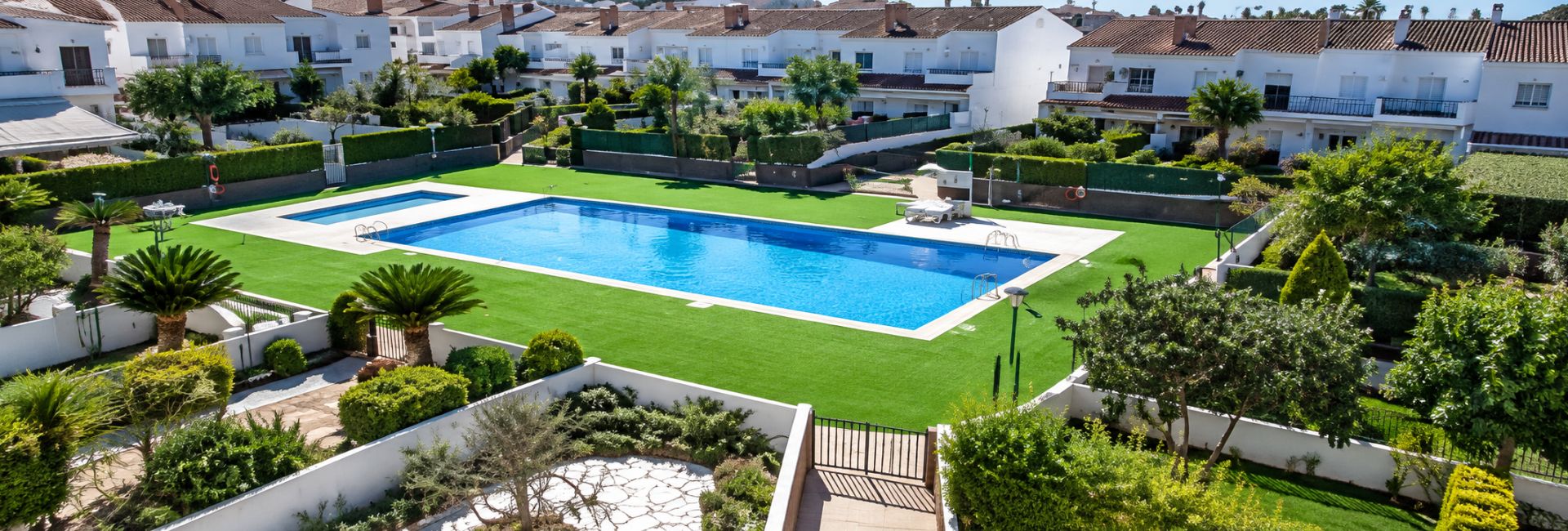
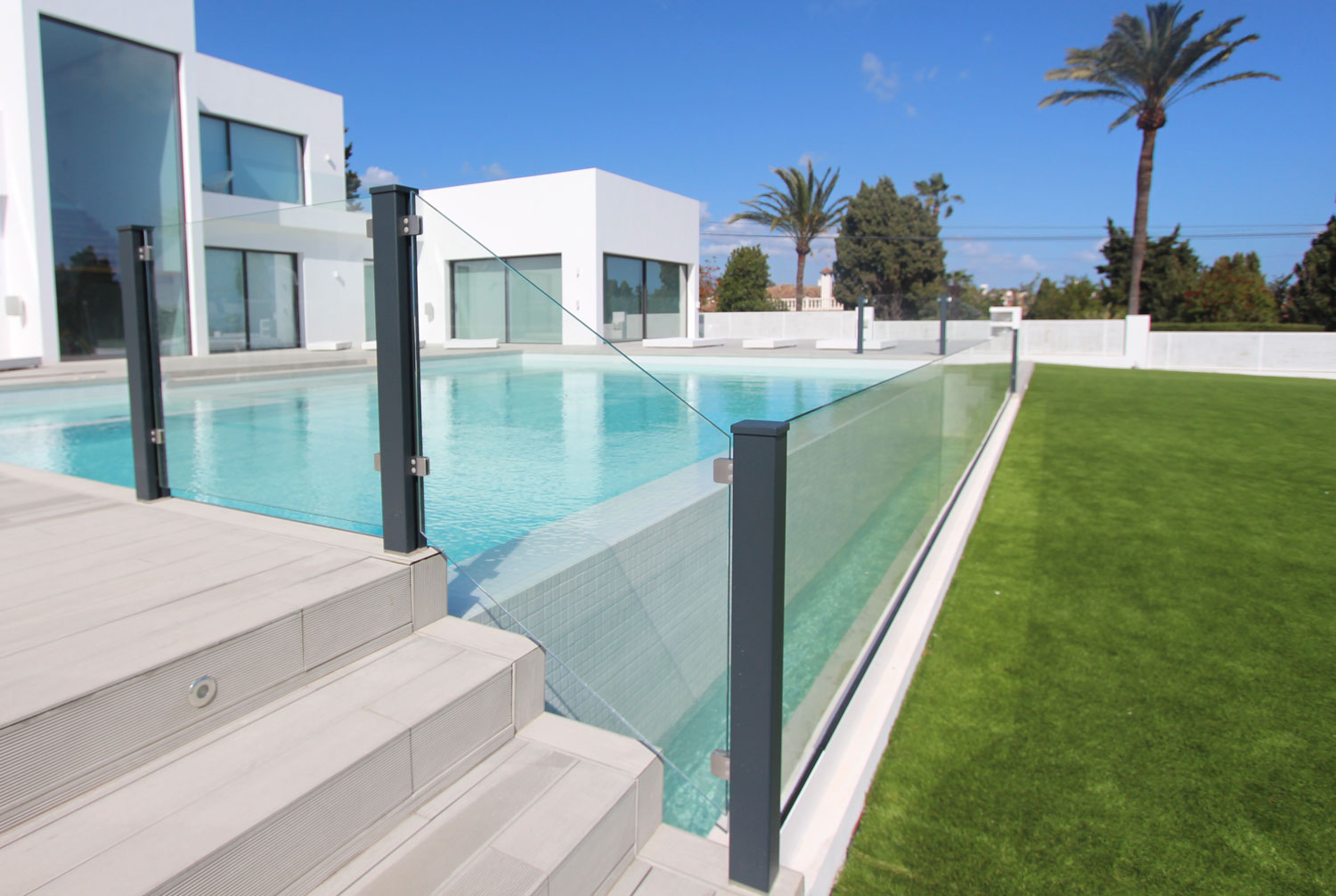
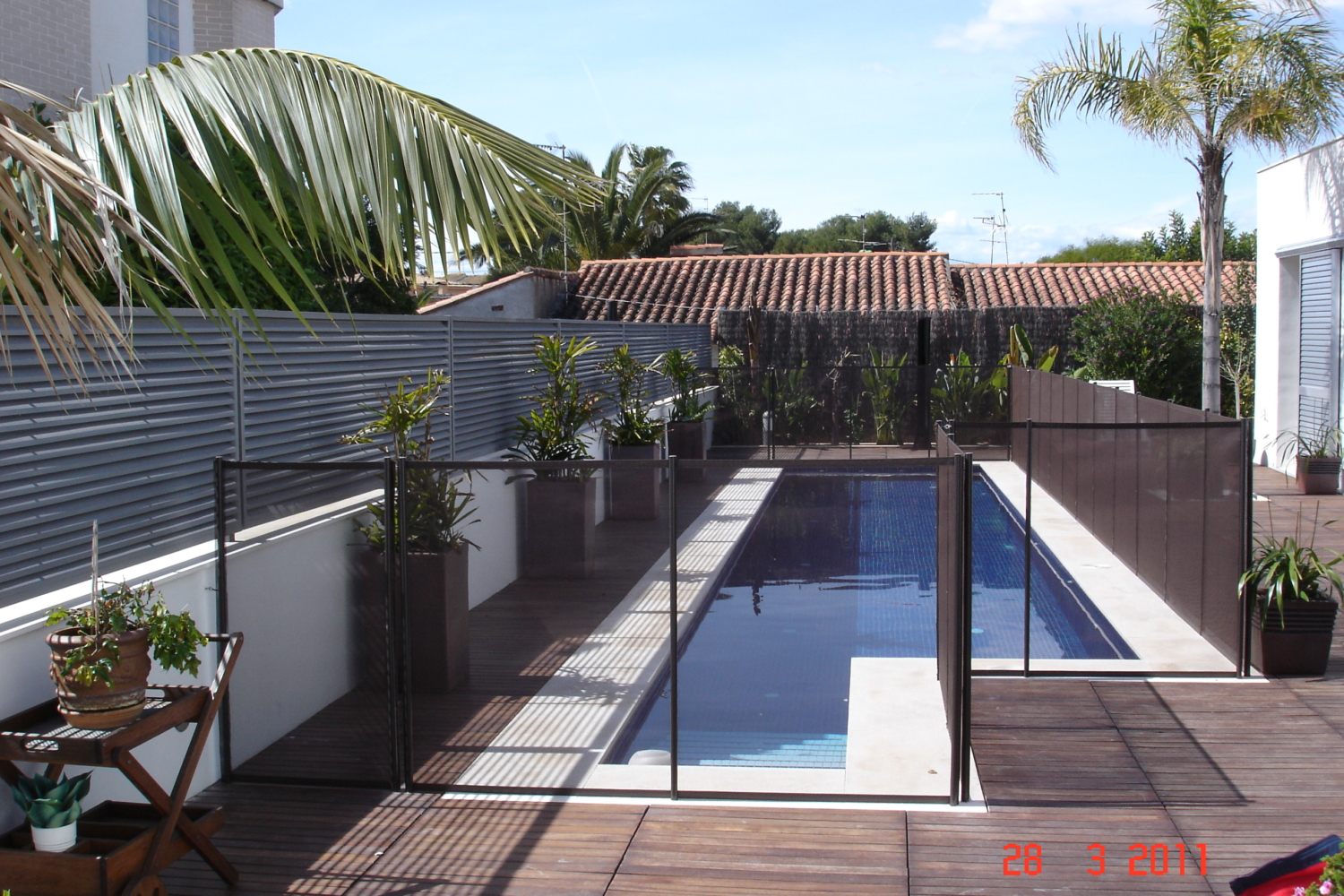
- Swimming pool surrounds.
- Communal areas in residential developments and spaces with frequent foot traffic.
- Homes with dogs.
- Small spaces, where a very long pile can feel excessive.
Its appearance is slightly more restrained and less lush than artificial grass with a higher pile. In return, it tends to age better in areas with frequent foot traffic.
35 mm Artificial Grass: The Middle Ground
It is a popular pile height for residential gardens, and for good reason: it provides a natural, full appearance without showing the effects of foot traffic as quickly as longer fibres can.
It works well for:
- Family gardens with normal everyday use.
- Areas that combine pathways with seating or relaxation spaces.
- Large penthouse roof terraces and spacious terraces.
- Projects where a natural appearance is important without sacrificing durability.
If you are unsure between the two extremes and the garden has mixed use, this is usually the most balanced choice. It may not look as striking in photographs as a longer pile, nor be as resistant as a shorter pile in very high-traffic areas, but it tends to perform best in most real-world situations.
40 mm Artificial Grass: Fullness and Appearance
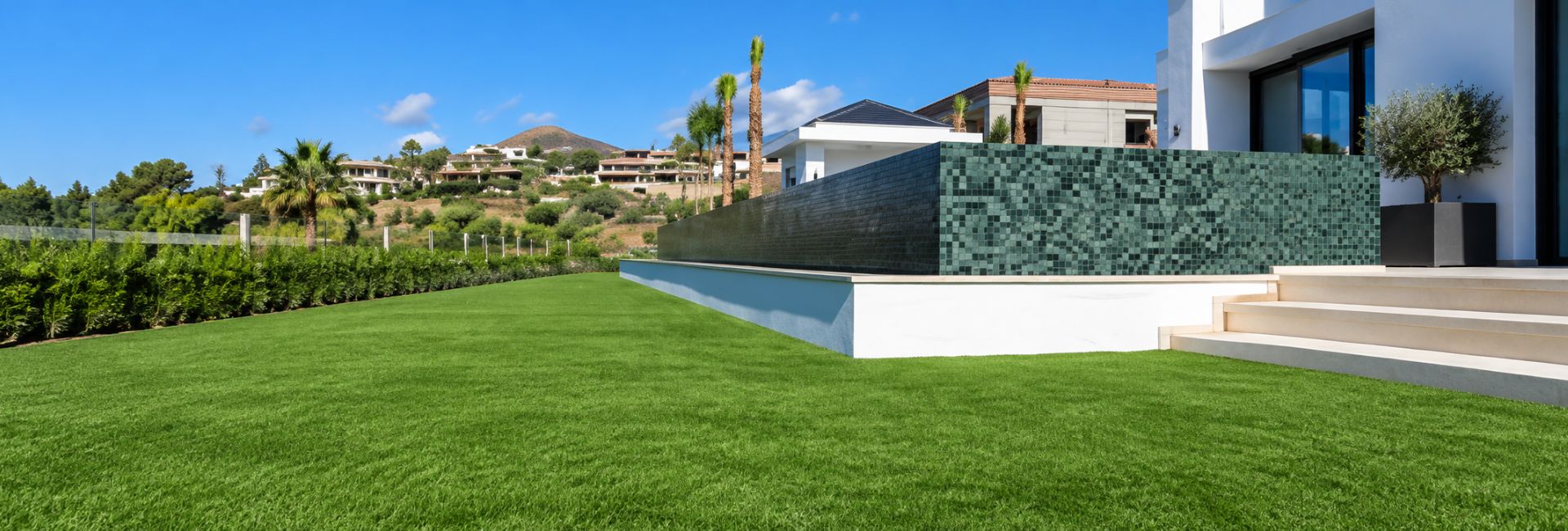
It creates a fuller, softer appearance and can give the surface a lush, natural look. It is a good choice when visual appearance matters more than heavy use.
It makes sense for:
- Ornamental gardens and low-traffic areas.
- Relaxation areas, landscaped corners and seating spaces.
- Large areas, where the extra volume has more visual impact.
- Projects where appearance is more important than intensive use.
The trade-off is well known: in areas with constant foot traffic, longer fibres flatten sooner and worn pathways become more noticeable. Regular brushing can help correct this, but it is worth knowing in advance.
For a walkway between the house and the swimming pool, 40 mm is rarely the best choice.
Comparison Table
| Feature | 30 mm | 35 mm | 40 mm |
|---|---|---|---|
| Ideal use | High foot traffic | Mixed use | Low foot traffic |
| Appearance | Neat, compact | Natural, balanced | Lush, full |
| Resistance to foot traffic | High | Medium-high | Medium |
| Maintenance (brushing) | Low | Medium | More frequent |
| Feel underfoot | Firm | Balanced | Soft |
| Typical areas | Terraces, pool surrounds, paths and homes with pets | Family gardens | Decorative and seating areas |
30 mm
- Ideal use
- High foot traffic
- Appearance
- Neat, compact
- Resistance to foot traffic
- High
- Maintenance
- Low
- Feel underfoot
- Firm
- Typical areas
- Terraces, pool surrounds, paths and homes with pets
35 mm
- Ideal use
- Mixed use
- Appearance
- Natural, balanced
- Resistance to foot traffic
- Medium-high
- Maintenance
- Medium
- Feel underfoot
- Balanced
- Typical areas
- Family gardens
40 mm
- Ideal use
- Low foot traffic
- Appearance
- Lush, full
- Resistance to foot traffic
- Medium
- Maintenance
- More frequent
- Feel underfoot
- Soft
- Typical areas
- Decorative and seating areas
Why Pile Height Shouldn’t Be the Only Factor
These are the factors that really make the difference between two artificial grass products with the same pile height:
- Density. How many fibres there are per square metre. A dense 30 mm artificial grass can look better and withstand use more effectively than a less dense 40 mm product. If you only compare two specifications, look at density and total weight.
- Total weight. The amount of material per square metre. It is a useful overall indicator because it combines pile height, density and fibre thickness into a single figure.
- Fibre type. Monofilament fibres with a central rib tend to remain upright and recover more effectively, while fibrillated fibres are generally more economical and behave differently. Many products combine both types.
- Curled yarn. This is the short, curly fibre at the base, usually in shades of brown or dry green. It supports the main fibres, adds visual density and prevents the artificial grass from looking “empty” underneath. With the same pile height, artificial grass with a good curled yarn layer will generally retain its appearance better than a product without one.
- Recovery. The ability of the fibres to spring back after being walked on or having a chair placed on them. It is one of the characteristics that becomes most noticeable over time, yet one of the hardest to assess when buying artificial grass.
- UV protection. This affects how quickly the colour fades. It is particularly important in very exposed areas with little or no shade.
- Backing and drainage. These determine how effectively water drains through the artificial grass. They are particularly important around swimming pools, on terraces and in homes with pets.
Pile height should be chosen according to how the area will be used. Quality should be assessed using these specifications.
How to Choose Based on How You’ll Use the Space
- Family garden with children. 35 mm with good density and recovery. If there is a specific play area that gets very heavy use, consider 30 mm for that section.
- Terrace or penthouse roof terrace. 30 or 35 mm. Longer fibres tend to flatten sooner in small, heavily used areas, and on elevated terraces the grass is often exposed to strong sunlight with little or no shade.
- Swimming pool surround. 30 mm with good drainage. Efficient water drainage and resistance to frequent wet, barefoot use matter more here than a fuller appearance.
- Areas with tables, chairs or sun loungers. 30 or 35 mm. If the furniture is moved regularly, short or medium-length fibres recover their shape more easily and make it easier to brush out areas that have been flattened.
- Pets. 30 or 35 mm, prioritising drainage and ease of cleaning. Very long fibres make maintenance more difficult.
- Communal areas in residential developments. 30 mm. Foot traffic is constant, so the priority is a surface that remains stable with minimal maintenance.
- Landscaped corners and decorative areas. 40 mm. This is where longer fibres tend to perform at their best.
It is also worth remembering that sports artificial grass — for padel, football or multi-sport areas — is a separate category, with much shorter pile heights and fibres designed to behave differently. The same selection criteria do not apply.
Common Mistakes When Choosing by Pile Height
One of the most common mistakes is assuming that a higher pile automatically means better quality. That is not necessarily the case: a 30 mm artificial grass with good density, durable fibres and a well-designed construction can look better and last longer than a lower-quality 40 mm product. That is why comparing quotes based only on fibre height can lead to the wrong conclusions.
The pile height should also be matched to how the space will actually be used. Choosing 40 mm for an area that is constantly walked across may cause the fibres to remain flatter over time along the most frequently used routes. The problem is not the 40 mm pile itself, but using it in an area where shorter or medium-length fibres would perform better. Before deciding, it is worth assessing density, recovery, fibre type, curled yarn and UV protection, as these factors directly affect how the artificial grass will perform after several years.
The choice should not be based on photographs alone either. Colour, texture and the feel underfoot are much easier to assess with a physical sample and under the natural light of the area where the grass will be installed. On the Costa del Sol, sun exposure is another particularly important consideration. All artificial grass heats up when exposed to direct sunlight, and longer fibres or darker shades can retain slightly more heat. On terraces and in unshaded areas, performance in direct sunlight is just as important as fibre height.
How to Get It Right Without Overcomplicating Things
The quickest way to decide is simple: first define how the area will be used, then choose the pile height and only then compare products within that height, taking density, weight and fibre type into account.
If the space has mixed uses — for example, a walkway leading to the swimming pool and a separate seating area — you do not necessarily need to install exactly the same artificial grass throughout. Combining different pile heights in different areas can produce better results than trying to find a single product that works for everything. In artificial grass garden projects, the intended use of each part of the outdoor space is one of the key factors to consider before choosing.
For artificial grass on terraces and penthouse roof terraces, where there are often high-traffic areas, outdoor furniture and greater exposure to direct sunlight, a short or medium pile can be particularly practical.
If you are unsure which pile height to choose, we can assess the characteristics of your space and how you plan to use it before recommending a specific option.